
Despite conflicting discussions on the Green transition in Latvia, FICIL’s Energy & Sustainability Work Group (WG), with new strengths, is focusing on key actions needed to ensure meaningful progress. The group highlights practical priorities across energy development, legislative predictability, and sustainable management of natural resources. With renewed leadership and a clear agenda, FICIL aims to support a stable, transparent, and future-ready sustainability framework for the country.
Debates on Latvia’s green transition remain active, bringing both opportunities and challenges. Therefore, FICIL’s Energy & Sustainability Work Group has outlined a set of recommendations aimed at ensuring more coherent, steady, and effective progress across the sector. More specifically, in the energy sector, the practical implementation of Latvia’s Energy Strategy 2050[1] requires removing legislative barriers, advancing Environmental Impact Assessment reforms, and supporting electrification, CO₂ solutions, and updated efficiency standards. In the legal and policy framework, greater predictability and transparency are needed, along with careful assessment of the risks of the Economic Sustainability Law and the Transport Energy Law. In the field of natural resources and the circular economy, responsible use of resources, tackling shadow economy, ensuring proper licensing and recultivation, and embedding circular principles into procurement, taxation, and financing remain essential to ensure long-term sustainability and stability.
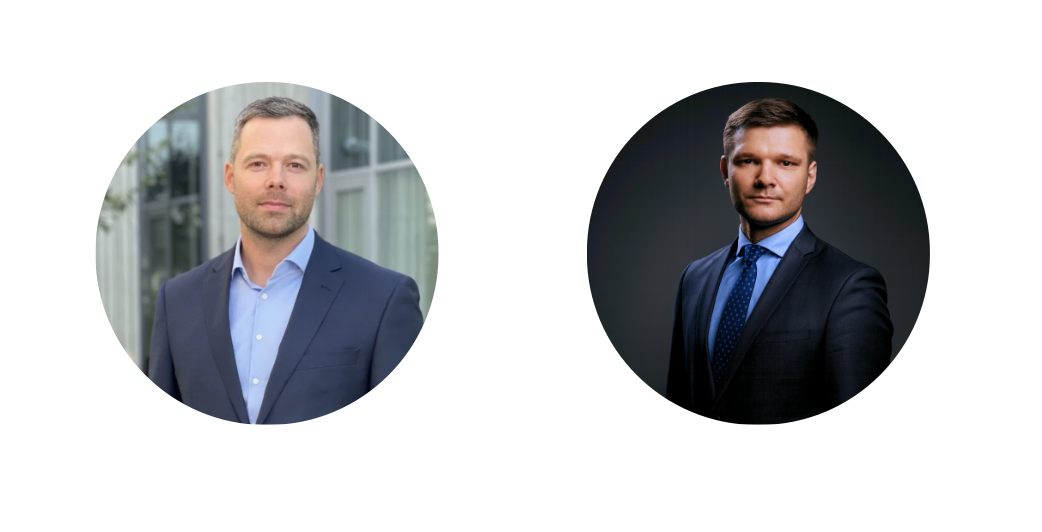
As the Energy & Sustainability Work Group (WG) enters a new phase of activity, FICIL is pleased to announce new leadership for the group that will guide its work in the coming years. The Work Group will now be led by Jānis Zuļķis, Senior Legal Counsel at Gren[2] and Krists Mertens, Member of the Management Board at SCHWENK Latvija.[3] Their combined experience in sustainable industry transformation, regulatory implementation, and large-scale infrastructure projects will help drive FICIL’s ongoing contribution to Latvia’s green transition.
Krists Mertens: ”A strong and consistent dialogue between the public and private sectors is essential for shaping a predictable and sustainable business environment that drives long-term economic growth. I am grateful to FICIL members and the Board for their trust and support. I am honored to represent members’ interests in the coming period, working together with Jānis Zuļķis on issues crucial for Latvia’s economic development, such as energy, efficient resource use, and strategic planning.”
Jānis Zuļķis: “Economic growth is a marathon, not a sprint – it demands adaptability, a skilled workforce, fair competition, and a long-term vision. The energy sector is the cornerstone of this progress; without it, sustainable growth cannot be achieved. Green energy is not only about climate goals – it ensures energy independence and resilience for Latvia’s future. I sincerely thank FICIL members for their trust and support. Together, through meaningful cooperation with government and state institutions, we will navigate change and build a framework that empowers sustainable development.”
Additionally, FICIL extends its sincere gratitude to the previous WG leader Dace Cīrule for her dedicated work with FICIL for 8 years. We are deeply appreciative of her leadership, expertise, and commitment in shaping the Work Group’s priorities and strengthening the dialogue with policymakers.
With its renewed leadership and clear priorities, FICIL’s Energy & Sustainability Work Group will continue to provide practical, and evidence-based recommendations to Latvian government, helping Latvia create a strong, predictable, and future-ready sustainability framework that supports investment, innovation, and sustainable growth.
Sources:
[1]https://www.kem.gov.lv/sites/kem/files/media_file/LV_Ener%C4%A3%C4%93tikas_strat%C4%93%C4%A3ija_03.2025.pdf?.