
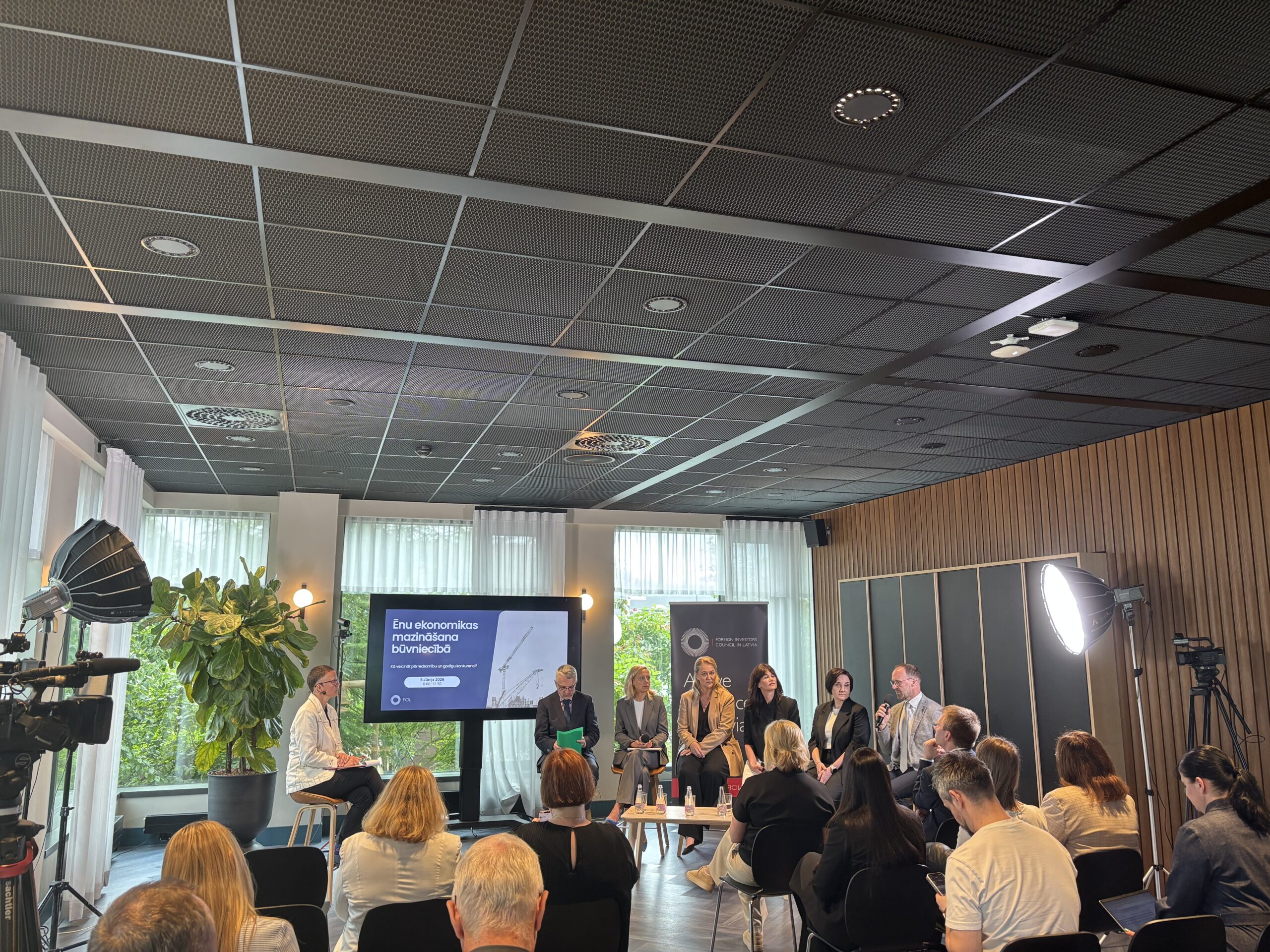
During the public discussion “Reducing the Shadow Economy in Construction: How to Promote Transparency and Fair Competition?”, held in Riga on 9 June 2026, several key areas were identified that require continued attention in order to reduce the shadow economy in the construction sector and promote fair competition. Participants emphasized the need to improve and simplify the tax system, streamline the regulatory framework governing construction, and strengthen transparency and a responsible business environment within the industry. The discussion also highlighted the importance of maintaining a constructive dialogue between public institutions and industry representatives to develop sustainable solutions that encourage legal business activities and reduce the further spread of the shadow economy in Latvia.
The event was organized by the Foreign Investors’ Council in Latvia (FICIL) in cooperation with Vastint Latvia Ltd. The discussion was moderated by Evita Goša, Head of FICIL’s Shadow Economy Combatting work group, and featured participation from Baiba Šmite-Roķe, Director General of the State Revenue Service; Ilmārs Šņuciņš, Deputy State Secretary at the Ministry of Finance; Ilze Beināre, Deputy State Secretary at the Ministry of Economics; Edijs Kupčs, Chairman of the Board of the Latvian Construction Contractors Association; Agnese Garda, Head of Legal at Swedbank Latvia; and Ilze Berga, Partner at KPMG Latvia and Member of the FICIL Board. The purpose of the discussion was to foster a practical and solution-oriented dialogue on reducing the shadow economy in the construction sector.
Fair Competition and Tax Compliance Are Prerequisites for Sustainable Development of the Construction Sector
Reducing the shadow economy in the construction industry is a crucial prerequisite for promoting fair competition, fostering innovation, and creating a sustainable business environment. Participants stressed that paying taxes serves the interests of society as a whole, while tolerance of the shadow economy creates unequal competitive conditions, hinders sectoral development, and negatively affects both businesses and employees in the long term.
Effective Public Procurement, Competent Clients, and Transparent Regulation Are Key Instruments for Reducing the Shadow Economy
To reduce the prevalence of the shadow economy, it is necessary to improve the public procurement system, strengthen the competence of contracting authorities, and review the existing regulatory framework. Participants highlighted the need to introduce higher-quality bidder evaluation criteria, promote the involvement of industry organizations, develop centres of competence, and continue improving the sector’s general agreement framework, thereby creating more effective mechanisms to ensure fair competition.
Combating the Shadow Economy Is a Shared Responsibility of the State, Industry, and Society
Both the actions of public institutions and the attitudes of the industry and society play a vital role in combating the shadow economy. It is necessary to reduce the perception of impunity, establish clear and understandable regulations, and create motivating conditions for legal business activities. At the same time, clients and entrepreneurs must assume greater responsibility by refusing cooperation with dishonest market participants and promoting transparent business practices.
At the conclusion of the panel discussion, participants agreed that reducing the shadow economy in the construction sector requires coordinated and consistent long-term action, where both the capacity of public institutions and the involvement of industry stakeholders and society are equally important. Participants agreed that only through systemic reforms, transparent regulation, and responsible conduct an environment can be created in which fair competition becomes the industry standard rather than the exception.
FICIL’s Shadow Economy Reduction Working Group continues to provide a platform for meaningful dialogue between the public and private sectors, promoting the development and implementation of practical solutions aimed at reducing the shadow economy in Latvia.
Information About the Event
The full recording of the event is available on the Foreign Investors’ Council in Latvia (FICIL) Youtube channel.